Showing posts with label Philippine Endemic. Show all posts

Wednesday, March 7, 2012

Bird of the Philippines: Mindanao Broadbill

Mindanao Broadbill (Eurylaimus steerii) is categorized by IUCN 2012 as vulnerable. BirdLife International 2012a, reported that population decline is primarily due to it's declining and fragmented population because of lowland deforestation, habitat destruction and forest fragmentation. Mindanao broadbill is a mindanao endemic and inhabits lowland forest with elevation below 1,200m.

Mindanao Broadbill has reportedly (pre 1980s) been to be seen in Mt. Matutum, (Birdlife International, 2012a), located in the province of South Cotabato, on the island of Mindanao, in the south of the Philippines. Mt. Matutum has been assessed as an Important Bird Area in 2001, and issuance of Presidential proclamation no. 552 declaring it as protected landscape (CEPF, 2012) making it a priority for conservation where it holds key birds species that are vulnerable to global extinction.

Habitat destruction has caused continued decline in the species population throughout its range thus, determining the true distribution, population and habitat preference of Mindanao Broadbill in Mt. Matutum is vital to initiate intervention measures.

Mindanao Broadbill belongs to order Passeriformes, family Eurylaimidae, genus Eurylaimus and species steerii. Other common english name is Wattled Broadbill.

Collar et al., 1999, gave a detailed description and field characteristics of Mindanao Broadbill describing it as a brightly coloured passerine with a measurement of 17cm long. The face heading towards the throat is black. The eyes are coloured green, surrounded by large skyblue wattle. It has a broad, pale blue bill. The crown is maroon-purple with a white nuchal collar on its border and the underparts are lilac. It has been recorded feeding on fruit, but there are also records of broadbill chasing and catching insects and beating them on a tree limb before swallowing.


Bird of the Philippines: Mindanao Broadbill

Mindanao Broadbill is widespread and fairly common over the island of Mindanao. It frequents the under and middle storeys of rainforests, deep woods, inside dense patches of remnant original dipterocarp forest and in mixed dipterocarp and secondary forests. It is a lowland bird with a highest recorded elevation of 1,200m (Birdlife International, 2012).

Tuesday, March 6, 2012

Birds of the Philippines: Philippine Eagle

Philippine eagle is known before as the monkey eating eagle.It belongs to kingdom Animalia, Phylum- Chordata, Class-Aves, Order-Falconiformes, Family-Accipitridae. Its scientific name is Pithecophaga jefferyi.

It is a giant forest raptor endemic to the Philippines. It has brown and white-coloured plumage, and a shaggy crest and generally measures 86 to 102 centimeters in length and weighs 4.7 to 8 kilograms.

Birds of the Philippines: Philippine Eagle
Philippine eagle is the rarest, largest and most powerful birds int he world. The IUCN red list categorized Philippine eagle as critically endangered. Philippine eagle is also the worlds rarest and certainely among its most critical endangered certebrate species. Due to massive loss of habitat due to deforestation in most of its range.

Philippine eagle are monogamous and they tend to bond for life. The Philippine Eagle Foundation based in Davao city. And is committed to promote the survival of the Philippine Eagle, the biodiversity it represents, and the sustainable use of our forest resources for future generations to enjoy.


Friday, March 2, 2012

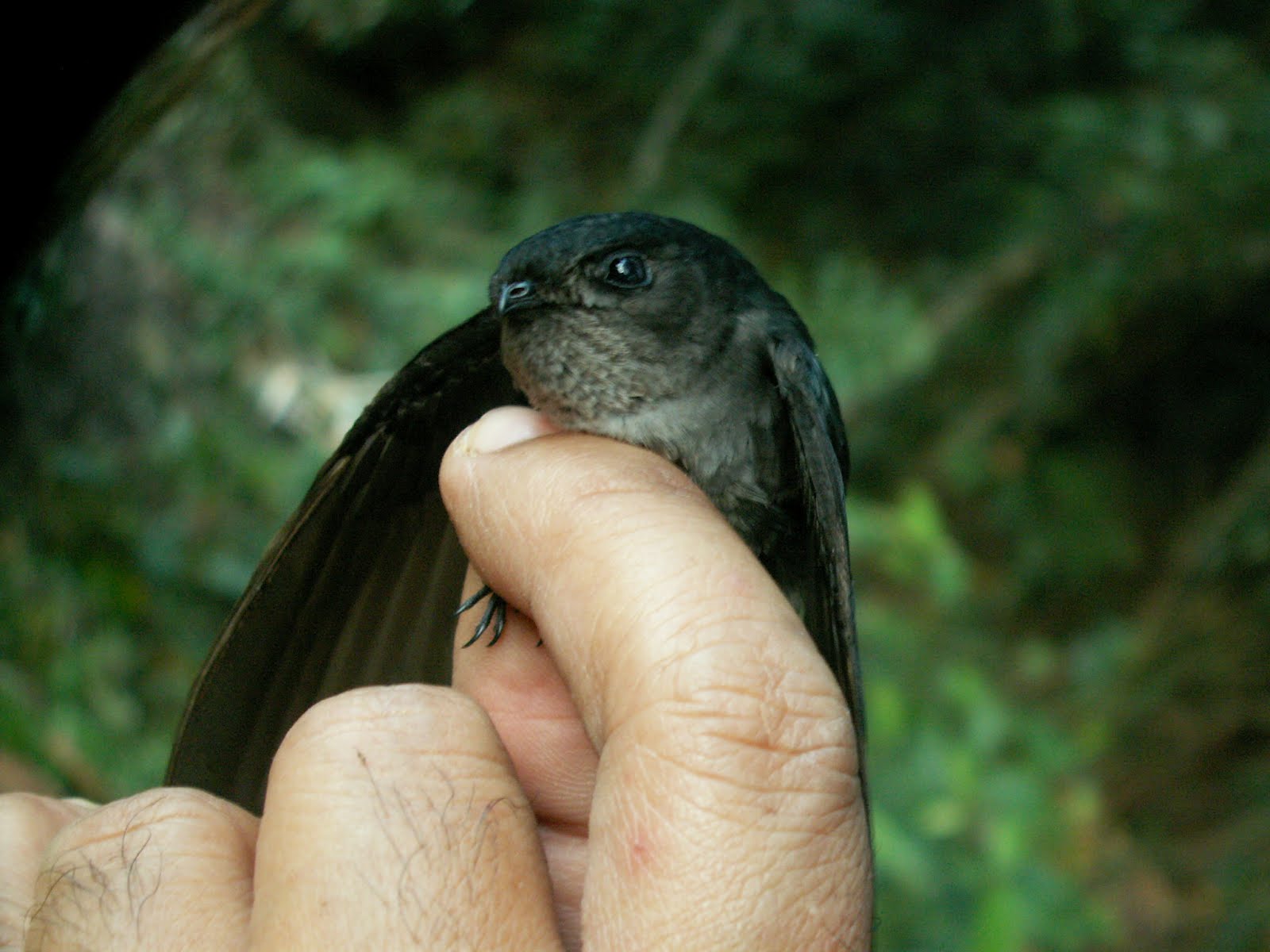
Philippine Swiftlet - Collocalia mearnsi

I personally spotted these bird species in the highlands of Mt. Sambilikan, Agusan del Sur. Philippine swiftlets are usually flying high above the sky. Some of them was also spotted in the caves of Andanan watershed. The local people in the area are collecting its nest for birds nets soup.


These Philippine swiftlets species belongs to kingdom animalia, Phylum- Chordata, Class-Aves, Order-Apodiformes, Family Apodidae. Its scientific name is Collocalia mearnsi.

The IUCN red list categorized Philippine Swiftlet as least concern. Although endemic to the island of the Philippines. Their population is still in excellent condition that they are not in need of immediate conservation attention.

These Philippine swiftlets glide on the air to catch small insects as food. And usually inhabits the caves as their resting areas and where they usually built their nests. I wish I had a slr canon camera, to took more photograph of these Philippine Bird species